

Does Plastic Impact Our Hearts?

In February you will find hearts everywhere, but this month we focus on the most important heart: your own. In recent years, scientists are finding evidence that tiny pieces of plastics — called microplastics — may have significant impacts on heart health.
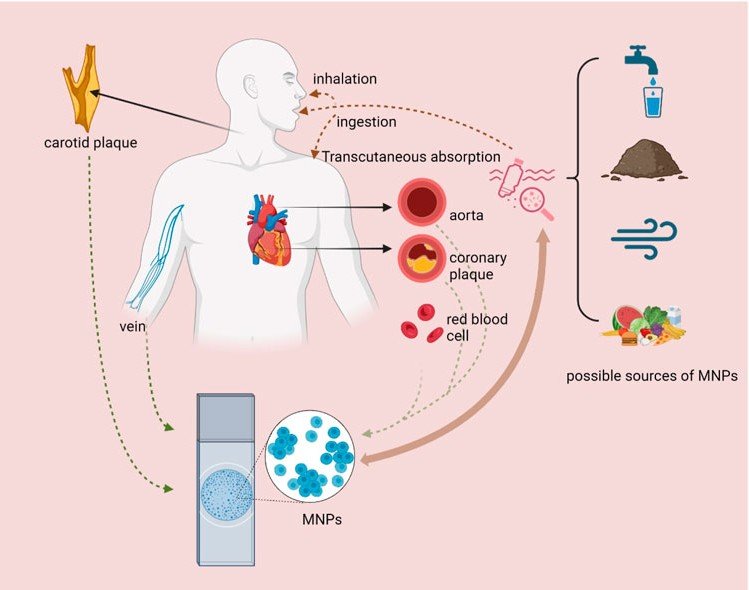
Microplastics are plastic fragments smaller than five millimeters, mostly formed as larger plastics break apart in the environment. They enter our body when we breathe, eat, and drink. Some smaller microplastics, called nanoplastics, are tiny enough to pass through the lungs or gut and enter the bloodstream, where they can travel throughout the body and accumulate around the heart.
An influential 2024 study in the New England Journal of Medicine provided the first evidence in humans that directly linked microplastics to heart damage. The researchers analyzed fatty plaques removed from a neck artery in 257 patients and found that 58% contained microplastics. When they followed the patients years later, the risk of heart attack, stroke, and premature death was 4.5 times higher among those with microplastics in their plaque. Although this is just one study, it is cause for concern.
Animal studies help scientists test one factor at a time in ways they cannot do in people. For example, in a recent 2025 study, mice were given either water contaminated with microplastics or clean water. Male mice who drank water with microplastics developed more artery-clogging plaques, along with blood vessel damage and inflammation. These results suggested a possible way microplastics could damage the heart and showed that males and females may not be affected in the same way.
Together, studies like these have helped us understand how microplastics may harm the heart, finding several possible ways, including: abnormal heart rate, damage to red blood cells or blood vessels, more blood clots, and scarring. The effects likely depend on the kind of plastic, the size of the plastic particles, the chemicals in the plastic, how much of these plastics a person has been exposed to, their age, and their sex.
Scientists are still working hard to fully understand the link between plastic and heart health. What is becoming clear is that plastics are a growing public health concern. Reducing exposure — through our own individual choices and stronger, protective new laws — is the best way to protect our hearts this Valentine’s Day.
Zheng H, Vidili G, Casu G, Navarese EP, Sechi LA and Chen Y (2024) Microplastics and nanoplastics in cardiovascular disease—a narrative review with worrying links. Front. Toxicol. 6:1479292. doi: 10.3389/ftox.2024.1479292
Do you have a question about the science of plastics? You can submit it here for Trisha’s consideration. Please note that we cannot answer every question we receive.